
Karainagar
Karainagar, Jaffna, Sri Lanka
A Deep Dive into its Enduring History Karainagar
Karainagar, an enchanting island situated approximately 15 kilometers northwest of Jaffna city, holds a prominent place in the historical tapestry of Sri Lanka’s Northern Province. Known by various names such as Karaitheevu, Shiva Poomi (spiritual land), and sometimes even identified with the ancient Manipallava Island, Karainagar’s history is a compelling narrative of ancient origins, enduring cultural identity, colonial transformations, and remarkable resilience through conflict.
Pre-Colonial Roots: Ancient Origins and Early Civilization
The origins of Karainagar stretch deep into antiquity, predating the formal establishment of the Jaffna Kingdom. Its very name is debated, possibly stemming from “karai plants” (a type of shrub) that once flourished there, or from “kadar-karai,” signifying a coastal settlement [1]. While some oral traditions link its inhabitants to migrations from Karaikkudi in Tamil Nadu, this remains a conjecture, with evidence suggesting independent local development [1].
Archaeological and Mythological Foundations
Evidence of early human presence is compelling. The site of Vearap-piddi, or Suriyanpiddi, on the island’s western side, is recognized as an ancient Buddhist site. Excavations have unearthed skeletal remains alongside pottery and burial offerings, indicating practices similar to those found at Anaikkottai, a significant archaeological site in the region [4]. This suggests a pre-Buddhist, perhaps Megalithic, cultural layer that predates the arrival of Buddhism in Sri Lanka [9]. The island’s connection to early Buddhist narratives is further solidified by its mention in the Akeerthi Jataka, one of the canonical Jataka stories [4].
Karainagar also features prominently in local mythology and folklore. According to the history associated with the ancient sage Agathiyar, Karainagar is believed to have remained above water even as other islands were submerged by the sea, highlighting its perceived ancient stability and sacredness [2]. The enduring worship of Nachiyars (believed to have created the fields) and Iyanar underscores a continuous spiritual tradition that predates formalized religious structures [2].
Royal Connections and Economic Significance
Historical accounts indicate that the Kings of Jaffna maintained a royal establishment, known as Raasaavin Thoaddam (King’s Garden), near the harbor in Karainagar [1]. Remnants of a ruined palace, purportedly for King Vediyarasan’s wife Nilakeshi, further attest to Karainagar’s importance to the regional monarchy [2]. Its strategic coastal location meant it was historically a hub for maritime trade, with records suggesting the export of dyed clothes and other goods by ship from Karainagar [2].
Colonial Encounters: Portuguese, Dutch, and British Rule
Karainagar’s strategic position on sea routes made it a focal point during the colonial period, each European power leaving an indelible mark on the island’s landscape and society.
Portuguese Period (16th-17th Century)
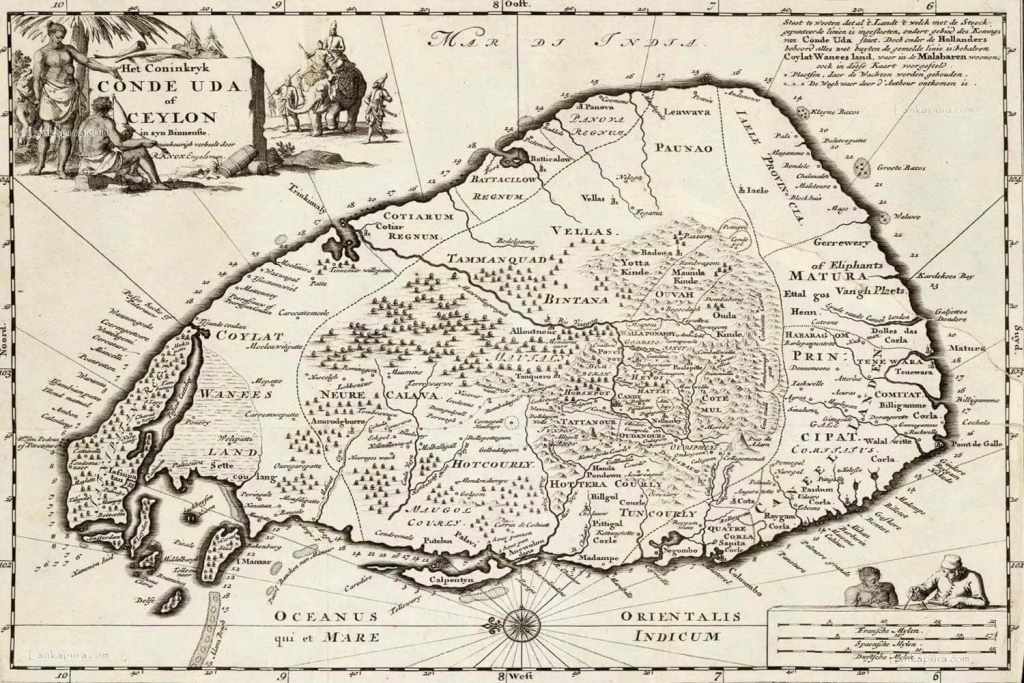
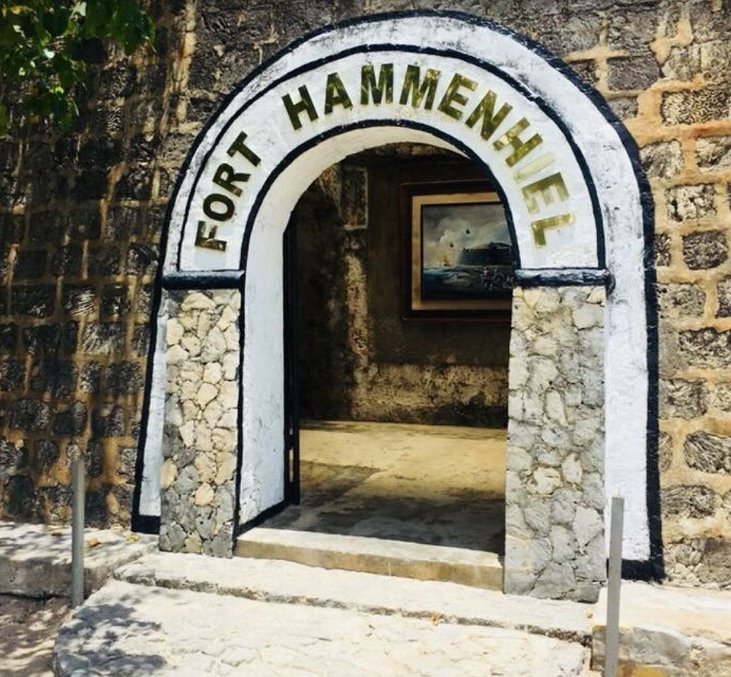
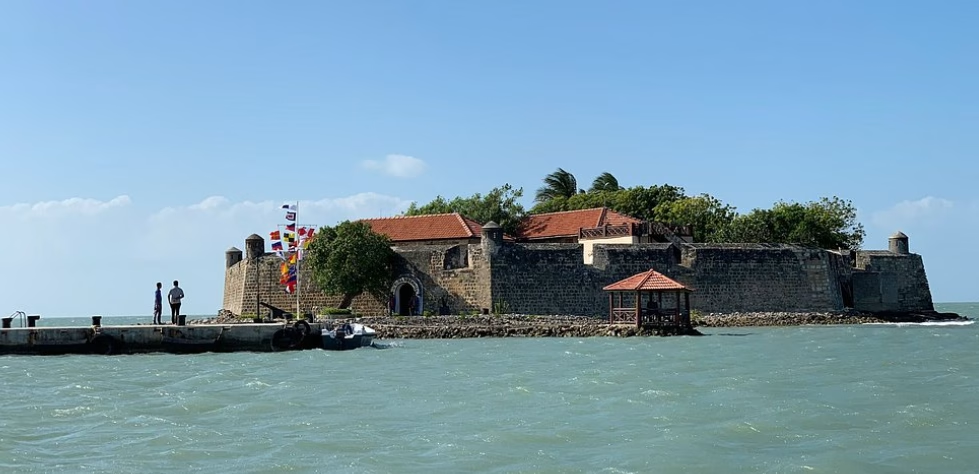
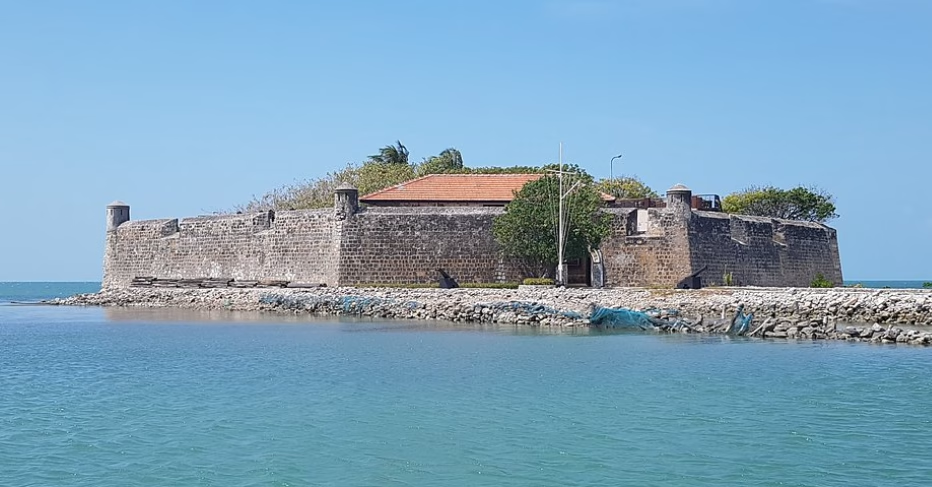
The Portuguese, who arrived in Sri Lanka in the early 16th century and eventually conquered the Jaffna kingdom in 1619, recognized Karainagar’s military importance. They constructed the Fortaleza Real (later known as Hammenhiel) on a small island off Karainagar’s southwest corner, guarding the entrance to the Jaffna Lagoon. This fort was reportedly built using materials from a demolished Iyenar Temple, a common practice of colonial powers repurposing local structures [7]. The Portuguese also actively promoted Roman Catholicism, establishing churches and influencing education patterns in Jaffna, including Karainagar, though traditional Hindu education persisted in the region [3].
Dutch Period (17th-18th Century)
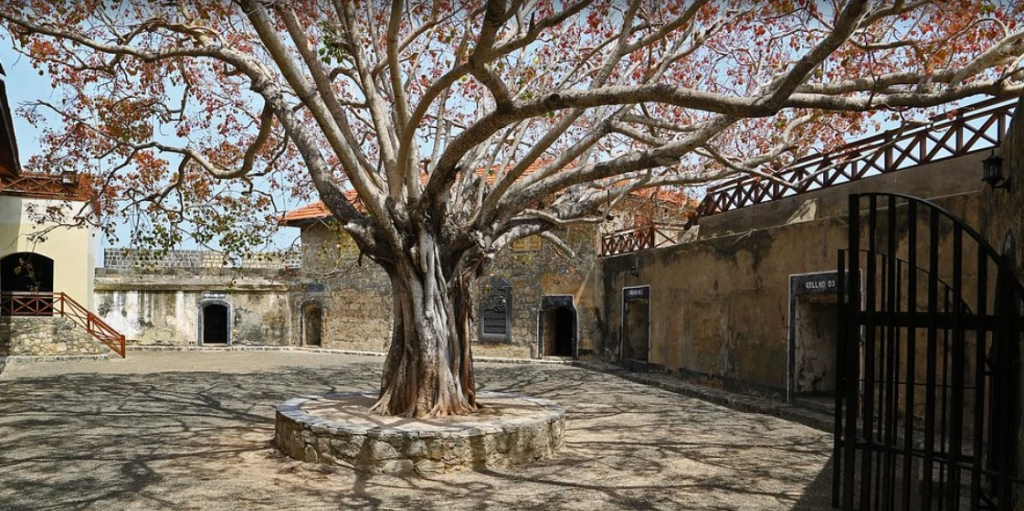
The Dutch East India Company (VOC) supplanted the Portuguese in the mid-17th century. They captured and extensively rebuilt Hammenhiel Fort, renaming it to Hammenhiel (meaning “Heel of the Ham”) [7]. During their rule, Karainagar itself was briefly renamed “New Amsterdam” [1]. The Dutch continued to use the fort as both a military stronghold and a prison. Their administration also impacted local trade and social structures, though the people of Karainagar steadfastly preserved their Saiva religion and Tamil language [1].
British Period (19th-20th Century)
The British took control of Sri Lanka (then Ceylon) in 1796. A significant infrastructural development during British rule was the construction of a causeway connecting Karainagar to the mainland in 1869 [1]. This causeway, built during the tenure of Sir W. Twynham as Government Agent of Jaffna (1867-1884), effectively ended the island’s geographical isolation and dramatically improved travel and trade for its residents [7]. In 1922, during a visit by Sir Ponnambalam Ramanathan, the island’s name was officially changed from Karaitheevu to Karainagar, a recognition of its established identity [1]. The British also utilized Hammenhiel Fort as a jail and hospital, and later, during World War II, as an air-sea rescue station [7].
Post-Colonial Era and the Civil War’s Impact
Following Sri Lanka’s independence in 1948, Karainagar continued its development, but its trajectory was severely altered by the protracted Sri Lankan Civil War (roughly 1983-2009).
The Conflict Years
Being a strategically important coastal island in the Northern Province, Karainagar became a critical zone during the civil war. The presence of a large Sri Lanka Navy base on the island underscored its military significance, leading to periods of intense conflict and restricted movement for residents [7]. The war brought immense hardship, including displacement, loss of life, and severe damage to infrastructure. Many Karainagar residents became internally displaced or sought refuge abroad, contributing to a significant global Tamil diaspora [6]. The conflict also had profound psychosocial impacts on the population, as it did across the entire Northern and Eastern Provinces [6].
Post-War Reconstruction and Contemporary Challenges
With the end of the civil war in 2009, Karainagar, like the rest of the Northern Province, embarked on a path of reconstruction and rehabilitation. Efforts have focused on rebuilding homes, schools, and roads, and restoring livelihoods.
Development Initiatives
International aid and government initiatives have supported the recovery process. Projects such as the rehabilitation of the Karainagar Boatyard with Indian assistance aim to boost local fisheries and create employment opportunities, thereby improving the livelihoods of the fishing community [8]. There has also been investment in housing, the restoration of religious sites like Thiruketeeswaram Temple (though this is not in Karainagar itself, it indicates broader regional efforts), and the provision of agricultural and fishing aid [8].
Enduring Cultural Identity and Challenges
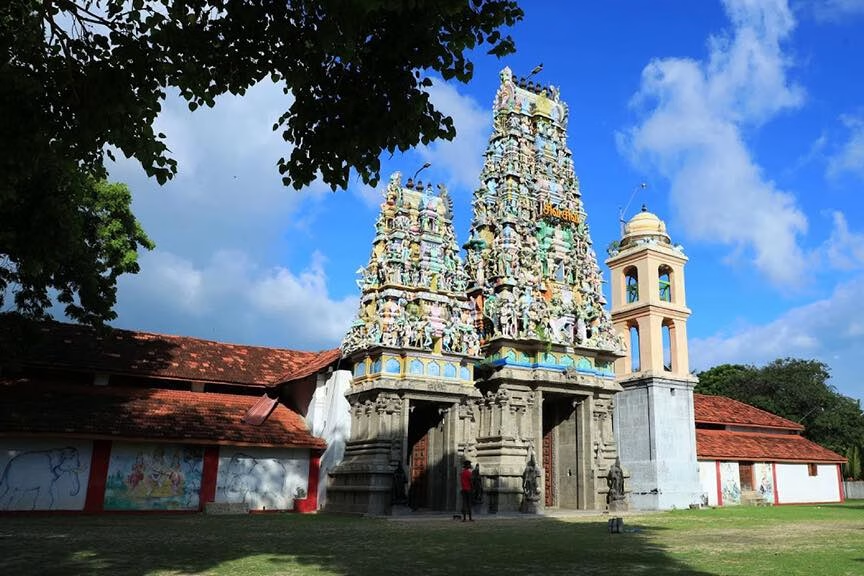
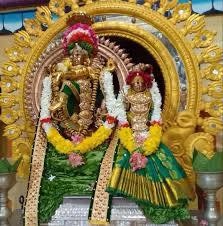
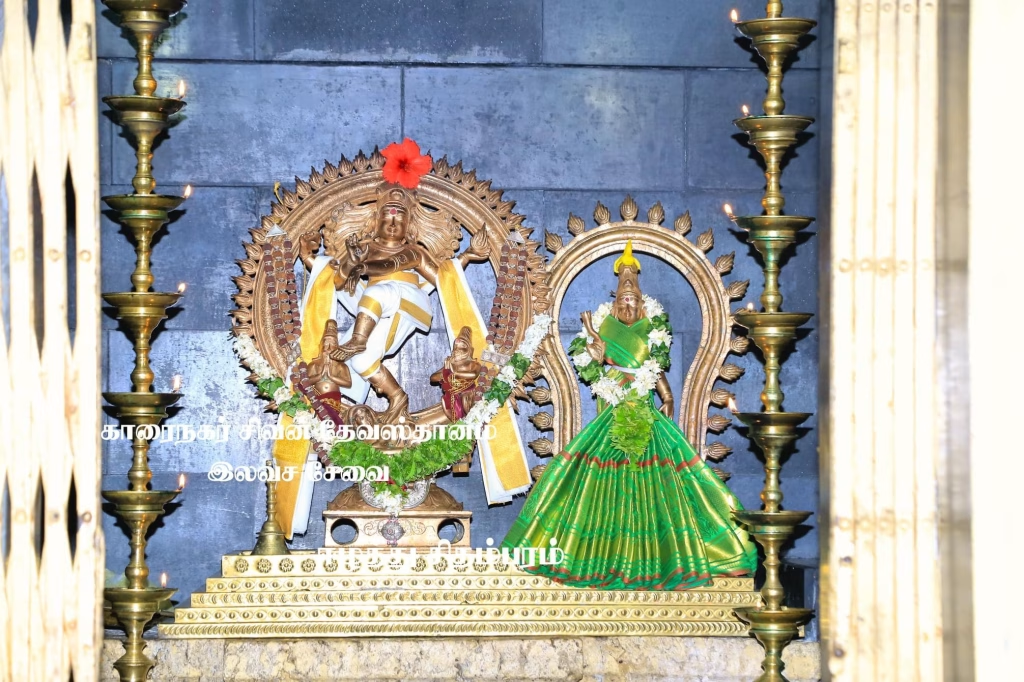
Despite the tumultuous past, Karainagar has maintained its strong cultural and religious identity. It remains predominantly Tamil-speaking and Saiva Hindu, evidenced by its impressive number of 43 ancient temples, including the renowned Eelathu Sithambaram (Karainagar Sivan Temple), known for its unique triple annual festivals [2].
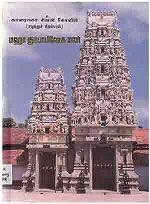
However, the post-war period has also presented complex socio-economic challenges. Issues such as water security, particularly groundwater conservation, remain pressing concerns for the island community [5]. Furthermore, the intricate dynamics of caste structures have re-emerged as a factor in resource distribution and social relations during the reconstruction process, highlighting the need for inclusive development approaches [5].
Karainagar stands today as a testament to its deep historical roots, its enduring cultural traditions, and the remarkable resilience of its people who continue to rebuild and preserve their heritage in the face of a challenging past.
Experiencing Karainagar – A Visitor’s Guide
- Beautiful Beaches
Casuarina Beach: This is arguably the most famous attraction in Karainagar, known for its pristine white sands and calm, shallow turquoise waters. It’s ideal for swimming, sunbathing, and leisurely strolls. The beach gets its name from the casuarina trees lining the shore, providing a serene atmosphere. You can also enjoy beachside dining and some water sports like snorkeling, diving, and jet skiing.
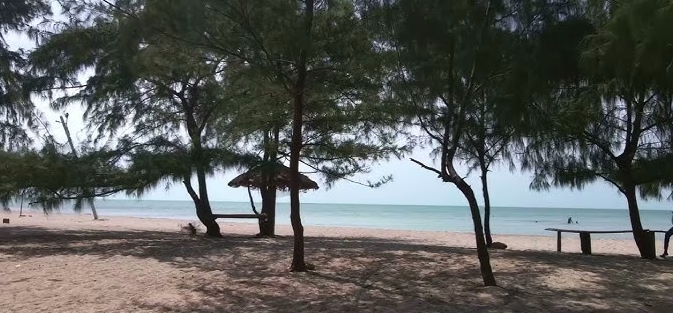
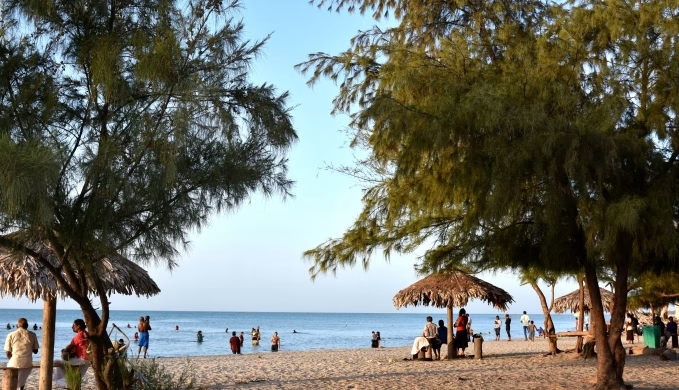
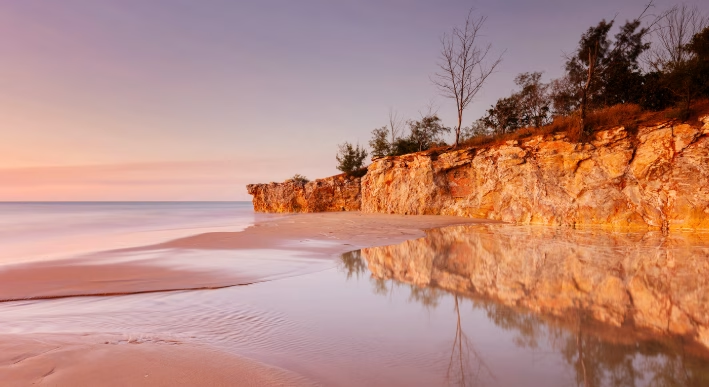
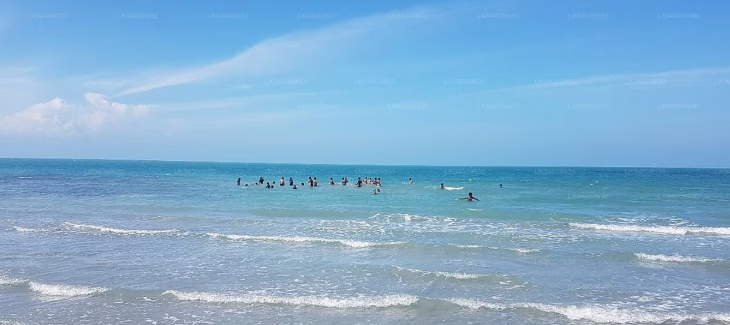
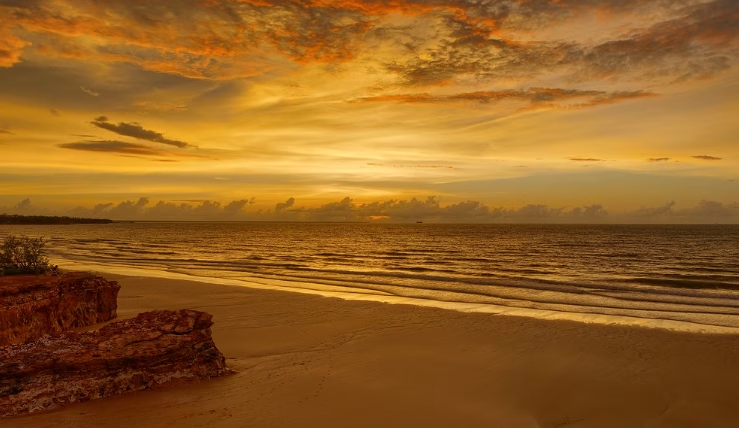
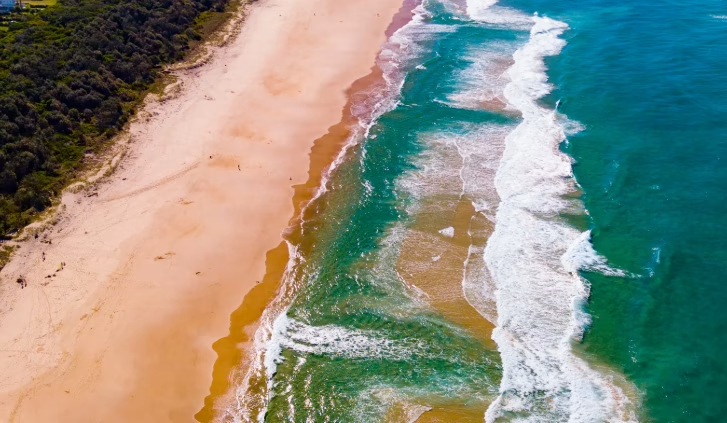
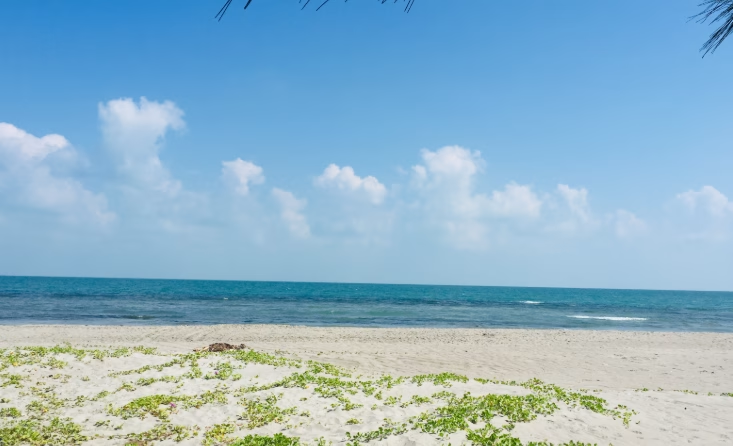
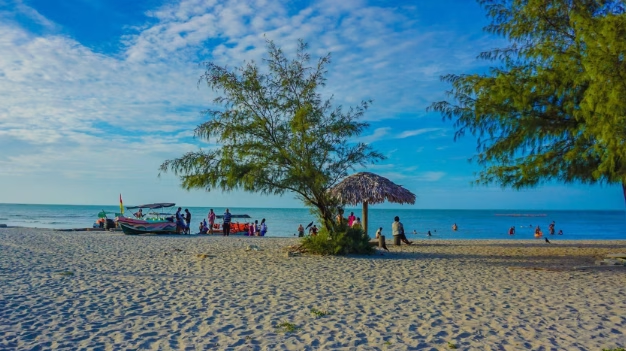
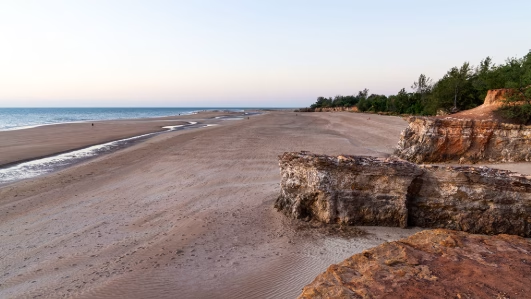
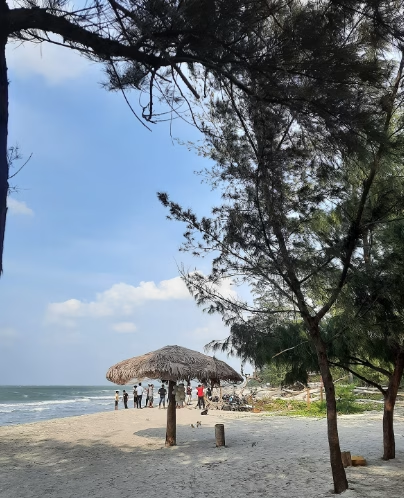
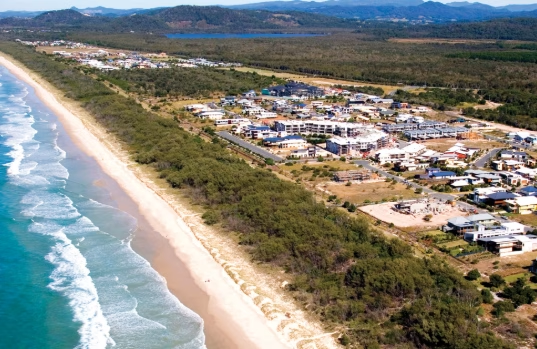
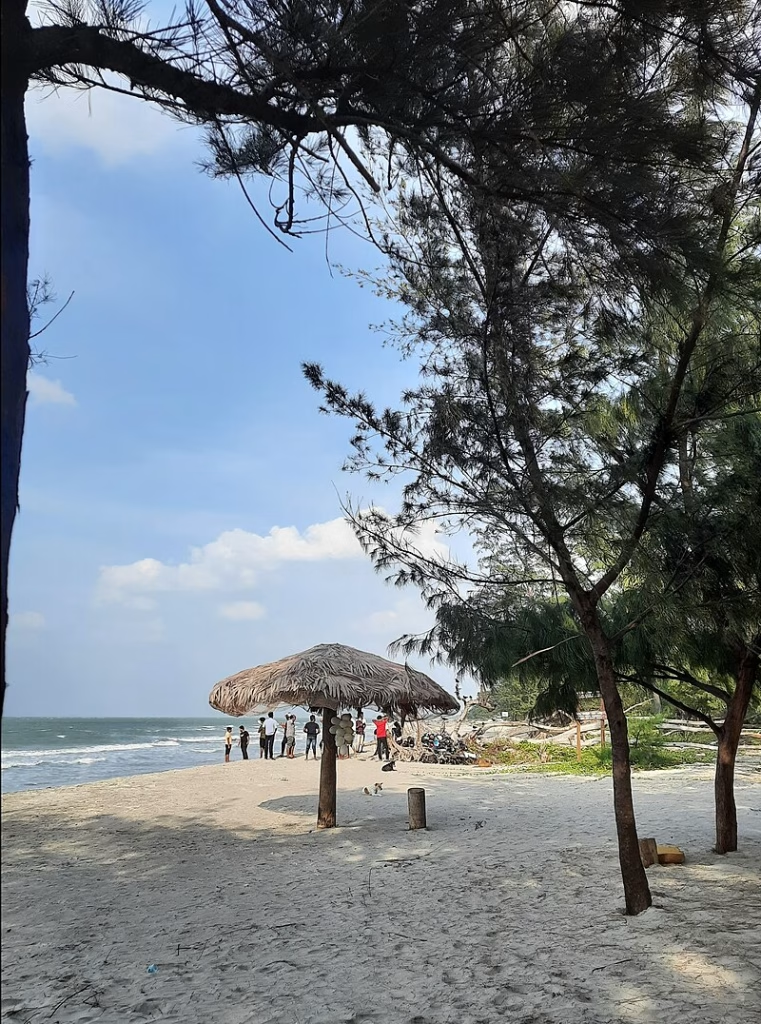
Kovalam Beach: Another picturesque beach in Karainagar, Kovalam Beach is characterized by its golden sand and a more traditional fishing village feel. You can observe local fishermen and their colorful boats, offering a glimpse into their daily lives. It’s a quieter beach, perfect for relaxation and enjoying the natural surroundings.
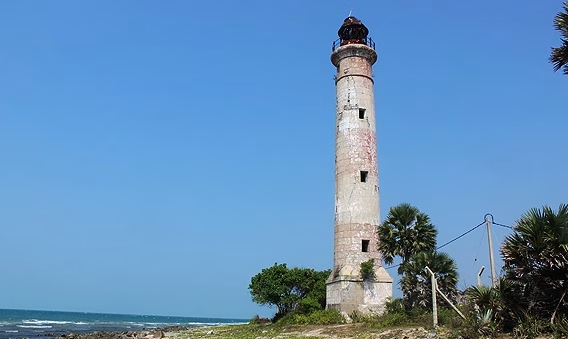
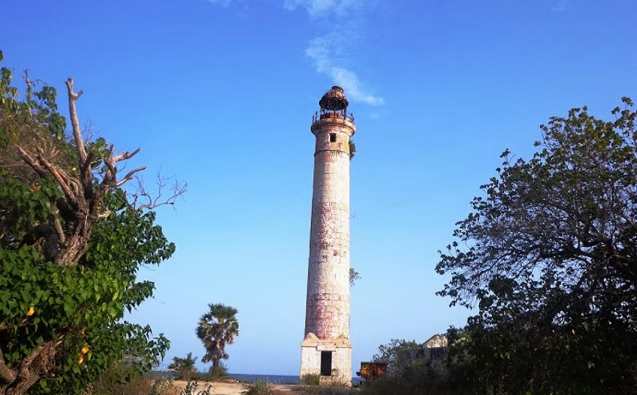
- Rich Cultural and Religious Sites
Karainagar is dotted with numerous Hindu temples, reflecting the strong Tamil cultural heritage of the island. Some notable temples include:
Karainagar Sivan Temple (Eelaththu Chidambaram): This ancient temple dedicated to Lord Shiva is a significant spiritual site and a testament to the region’s rich architectural and religious history. It’s a must-visit for those interested in cultural heritage.
Many other temples dedicated to deities like Pillaiyar, Murugan, Amman, and Vairavar are found across the island, each with its own unique history and significance.
- Historical Landmarks
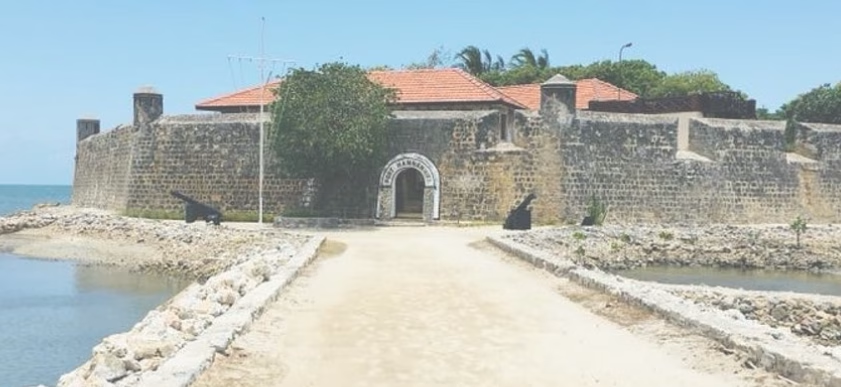
Fort Hammenhiel
Located off the southwest corner of the island, this small sea fort was built by the Dutch to guard sea routes. It’s a historical relic that offers insights into the colonial past of the region.
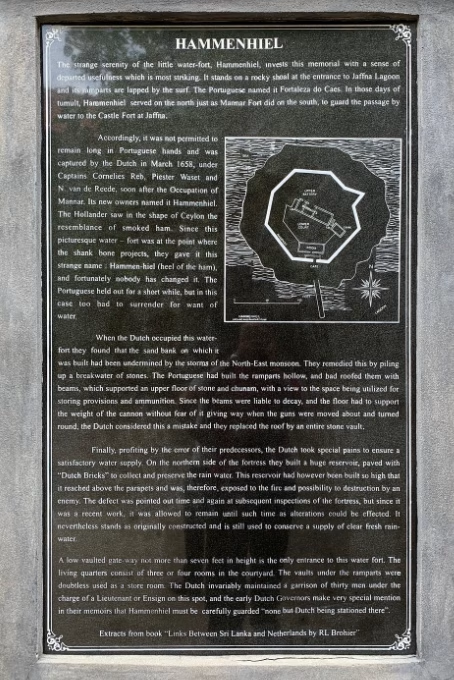
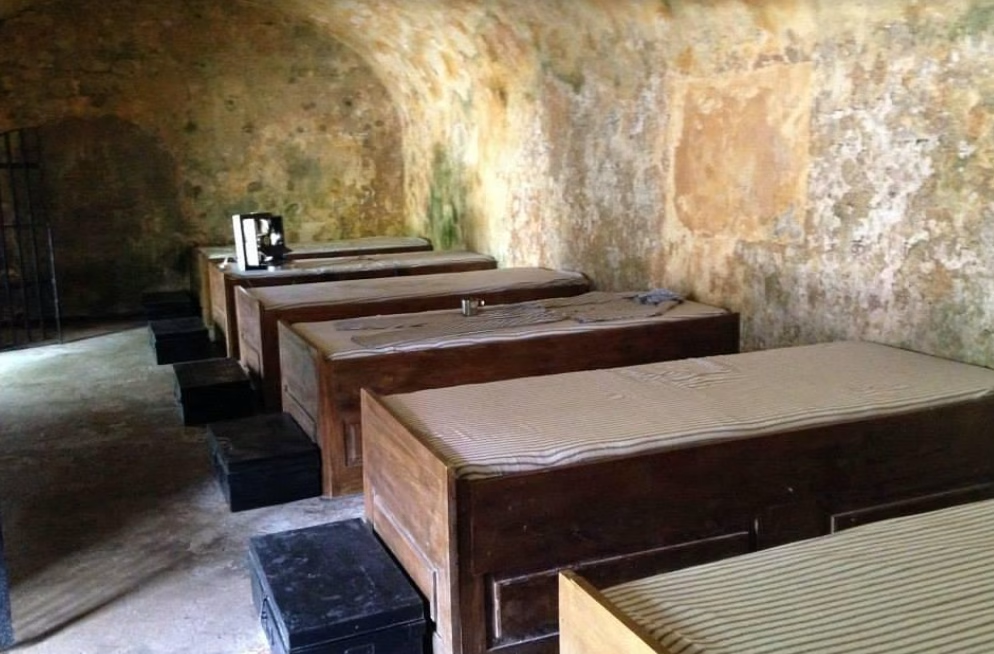
Poonalai Causeway
This causeway connects Karainagar to the mainland, and its construction in 1869 was a significant development for the island, easing travel and trade.
- Authentic Local Experiences
Fishing Villages: Visiting the fishing villages in Karainagar allows you to witness the traditional livelihoods of the locals, observe their daily activities, and interact with them.
Local Markets: Explore the bustling markets to find fresh produce, seafood, and local crafts, offering a chance to sample traditional snacks and immerse yourself in the local way of life.
Mangrove Forests: Take a boat tour or kayak through the mangrove forests for a unique nature experience. - Serene Environment
Karainagar offers a tranquil escape from the hustle and bustle, with its peaceful village life, lush greenery, and the calming rhythm of the sea. It’s a place to unwind, enjoy nature, and experience the authentic charm of rural Sri Lanka.
Tips for Tourists
Getting There: Karainagar is easily accessible from Jaffna town via public bus or private transport, connected by the Ponnalai Causeway.
Best Time to Visit Casuarina Beach
Weekdays are generally less crowded for a more peaceful experience.
Sunrise and Sunset: Try to catch either the sunrise or sunset at one of Karainagar’s beaches for breathtaking views.
Explore Nearby Islands
Consider day trips to nearby islands like Kayts and Delft for more adventurous explorations of ancient ruins and unique landscapes.
Karainagar provides a compelling destination for travelers seeking a blend of beautiful beaches, rich cultural experiences, and a glimpse into the everyday life of a resilient community in the northern part of Sri Lanka.
Reserches
References
https://nora.nerc.ac.uk/id/eprint/535687/1/N535687JA.pdf
Karthiga, I., Rameshwaran, P., Ketheesan, B., &
Sriskandarajah, N. (2023). Groundwater mapping and locally engaged water governance
in a small island terrain: Case study of Karainagar island, Northern Sri Lanka. World
Water Policy, 9(3), 456–480. https://doi.org/10.1002/wwp2.12112
Karainagar administrative system
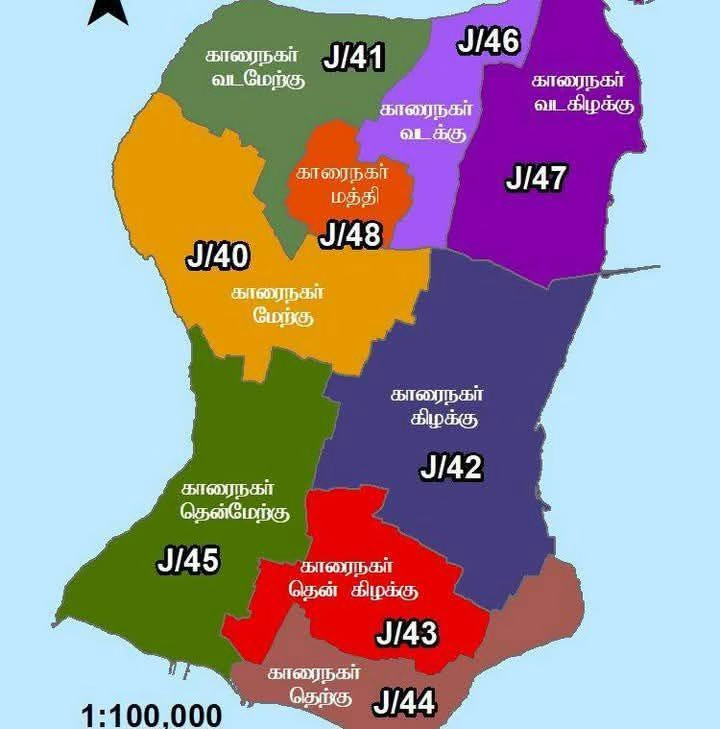
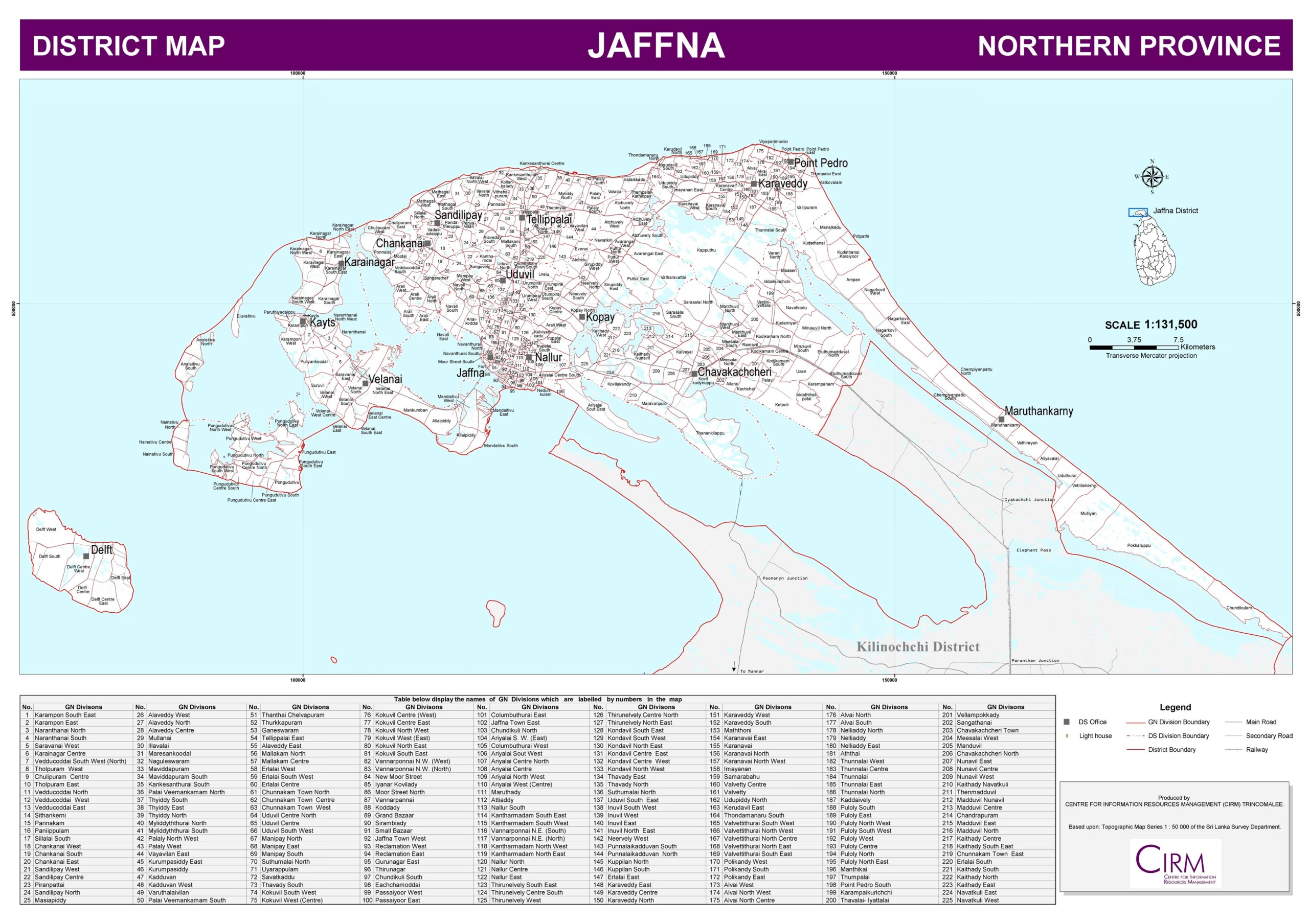
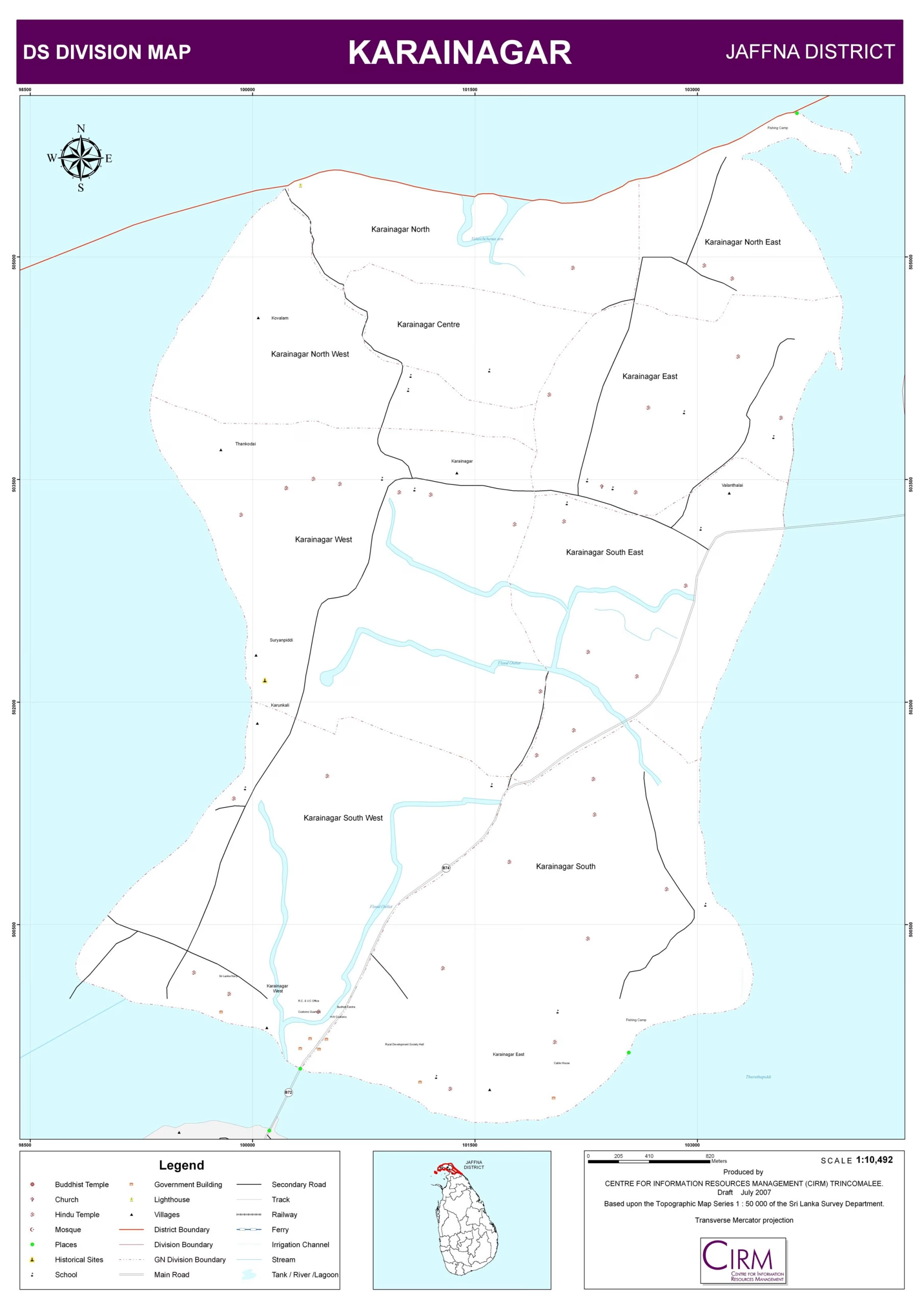
Karainagar, like all areas in Sri Lanka, is structured within a multi-tiered administrative system designed to facilitate governance, public service delivery, and local development. This system cascades from the central government down to local community units.
I. National and Provincial Level Context
Sri Lanka operates as a unitary democratic republic with a strong central government. Beneath the national level, there are nine provinces, each with a Provincial Council. Karainagar falls under the Northern Province, one of the areas significantly impacted by the civil war and now undergoing extensive reconstruction and development. The Provincial Council has responsibilities over certain devolved powers, including aspects of education, health, and local government [12].
II. District Level: Jaffna District
Karainagar is one of the administrative divisions within the Jaffna District, which is the northernmost district of Sri Lanka’s Northern Province. The Jaffna District is headed by a District Secretary (formerly known as Government Agent – GA), who is the chief administrative officer and represents the central government at the district level. The District Secretariat acts as a crucial link between national policies and their implementation at the local level. It plays a key role in coordinating development activities, disaster management, and overall public administration for the entire district [13].
III. Divisional Secretariat Level: Karainagar Divisional Secretariat
The Jaffna District is further subdivided into Divisional Secretariats (DS Divisions). Karainagar is one of these distinct Divisional Secretariats, having been elevated to an Assistant Government Agent (AGA) division as of April 7, 2003 [10]. The Divisional Secretary (DS), who heads this division, is a vital figure in local governance.
Functions of the Divisional Secretariat:
The Divisional Secretariat is considered the “one-stop shop” for many critical government services at the grassroots level. Its functions include [14]:
Public Service Delivery: Issuance of identity documents, birth, marriage, and death certificates, land administration, pensions, and various permits.
Social Welfare: Management of social benefit schemes like “Samurdhi” (a poverty alleviation program), and coordination of relief efforts during disasters (e.g., floods, droughts).
Development Planning: Overseeing and coordinating economic and social development projects within the division, often based on government policy plans and local needs. This includes promoting agricultural production, enterprise development, and the sustainable use of natural resources.
Coordination: Acting as a crucial coordinating body between the central government, provincial council, other government departments, and local community organizations.
Elections: Assisting in the coordination of national and local elections within its purview.
Cultural Preservation: Supporting activities that preserve traditional cultural values and movements.
The Karainagar Divisional Secretariat office is situated near Valanthalai junction, serving as the central administrative hub for the island [10].
IV. Local Authority Level: Karainagar Pradeshiya Sabha (Divisional Council)
Below the Divisional Secretariat, the next tier of local administration is the Local Authority. In rural and semi-urban areas like Karainagar, this is typically a Pradeshiya Sabha (known in Tamil as Piratēca Capai), or Divisional Council. The Karainagar Pradeshiya Sabha was established with effect from April 15, 2006, having been carved out from parts of the larger Kayts Divisional Council [11].
Structure and Functions of the Pradeshiya Sabha:
Elected Body: The Karainagar Pradeshiya Sabha is an elected local body responsible for local public services. It consists of a number of members (5 in Karainagar’s case, as of the 2011 elections) who are elected by the people of Karainagar [1, 2]. Sri Lankan local authorities generally use a mixed electoral system, combining ward elections with proportional representation [12].
Leadership: The Pradeshiya Sabha is led by a Chairman and Deputy Chairman, elected from among its members. For instance, after the 2011 local government election, Velautham Anaimugan (TNA) and Chandrasegaram Thurkeswaran (TNA) were appointed Chairman and Deputy Chairman respectively [11].
Service Delivery: The primary responsibilities of the Pradeshiya Sabha include:
Maintenance of local roads and public thoroughfares.
Sanitation and waste management.
Drainage systems.
Provision of public health services.
Management of common amenities.
Physical planning and building control.
Management of public parks and recreational facilities.
Collection of local revenue [11, 12].
V. Grassroots Level: Grama Niladhari (GN) Divisions
The lowest and most direct administrative unit for the citizens is the Grama Niladhari (GN) Division (formerly known as D.R.O. divisions, and then A.G.A. divisions) [13]. These are small, village-level administrative areas, each overseen by a Grama Niladhari (Village Officer), who acts as the direct link between the government and the community.
Karainagar Divisional Secretariat is divided into nine Grama Niladhari Divisions [10]. While specific names of all nine GN Divisions within Karainagar are not universally listed in public domain, some common names and areas of Karainagar that would fall under these divisions include:
Thangodai (Ward 1 for Pradeshiya Sabha)
Aalady (Ward 2)
Valanthalai (Ward 3)
Kalapoomy (Ward 4)
Vijavil (Ward 5)
Thuraimugam (Ward 6)
Areas like Maruthamalai, Makaruthapuram, Maruthadi, Thikkarai, Piddiyellai, Viyavil, Vetharadaippu, Periyamanal, Vilanai, Sadaiyali, Kovalam, Thoppukadu, Palavodai, and Neelankadu would constitute or fall within these GN divisions [10, 11].
Role of Grama Niladhari:
The Grama Niladhari is crucial for local governance. Their responsibilities include:
Acting as the first point of contact for citizens regarding government services.
Assisting in data collection for various government surveys and censuses.
Mediating local disputes.
Verifying residency for various official documents.
Disseminating government information and policies to the village level.
Reporting local issues and needs to the Divisional Secretary.
VI. Electoral Context
For electoral purposes, Karainagar belongs to the Vaddukoddai electorate within the larger Jaffna Electoral District [10]. Local government elections for the Pradeshiya Sabha are held periodically, and the results reflect the political landscape and preferences of the local population. For example, the 2011 local government election in Karainagar saw the Tamil National Alliance (TNA) securing the majority of seats [11].
In summary, Karainagar’s administrative structure is a well-defined hierarchy designed to ensure governance, public service delivery, and local community engagement, reflecting the broader administrative framework of Sri Lanka.
References:
[1] Karainagar Welfare Society (KWS). (n.d.). History. Retrieved from https://www.karainagar.org/karainagar/history
[2] Tamil Heritage. (n.d.). TOWARDS OUR PLACES – Karainagar. Retrieved from https://telibrary.com/en/towards-our-places-karainagar/
[3] Sasikala, K. (2001). The Educational Activities of the Portuguese in Jaffna – A Historical view. CORE. Retrieved from https://core.ac.uk/download/pdf/234671554.pdf
[4] AmazingLanka.com. (n.d.). Verappitti Ruins in the Island of Karaitivu Jaffna. Retrieved from https://amazinglanka.com/wp/verappitti/
[5] World Bank Group. (n.d.). Access to water and sanitation in Jaffna, Sri Lanka: perceptions of caste. Retrieved from https://microdata.worldbank.org/index.php/catalog/2254/download/34067
[6] Princeton University. (n.d.). What is Tamil for Loss? Remembering the Sri Lankan Civil War. Retrieved from https://aas.princeton.edu/news/what-tamil-loss-remembering-sri-lankan-civil-war
[7] Jaffna Royal Family. (n.d.). Historical Images – The Fort of Hammenhiel. Retrieved from https://www.jaffnaroyalfamily.org/photos/historicalphoto23.html
[8] The Indian Express. (2025, January 2). Indian grant to rehab, develop Sri Lanka’s north boatyard. Retrieved from https://indianexpress.com/article/india/indian-rehab-sri-lanka-karainagar-boatyard-9756909/
[9] Tamil Heritage. (n.d.). Excavation of AnaiKottai – Seal of Kovetham. Retrieved from https://telibrary.com/en/excavation-of-anaikottai-seal-of-kovetham/
[10] Karainagar Welfare Society (KWS). (n.d.). History. Retrieved from https://www.karainagar.org/karainagar/history
[11] Wikipedia. (n.d.). Karainagar Divisional Council. Retrieved from https://en.wikipedia.org/wiki/Karainagar_Divisional_Council
[12] Local government in Sri Lanka – Wikipedia. (n.d.). Retrieved from https://en.wikipedia.org/wiki/Local_government_in_Sri_Lanka
[13] Divisional secretariats of Sri Lanka – Wikipedia. (n.d.). Retrieved from https://en.wikipedia.org/wiki/Divisional_secretariats_of_Sri_Lanka
[14] ICTA. (n.d.). BRIEF OF SCOPE OF SERVICES – Process Study and Business Process Re-engineering solution for Divisional Secretariat (eDS). Retrieved from https://www.icta.lk/icta-assets/uploads/2016/11/Brief-of-Scope-of-Services.pdf
[15] Ministry of Internal and Home Affairs and Provincial Councils and Local Government. (2013/2016). Ward Map of Karainagar Pradeshiya Sabha – Jaffna District. Retrieved from https://mpclg.gov.lk/web/images/wardmaps/jaffna/05_Jaffna_KarainagarPS.pdf